If you have heard of escape rooms but have never tried one, this is your introduction to a world of puzzles, adrenaline and memorable shared experiences. Escape rooms have become one of the most popular activities in Israel and around the world, attracting couples, families, groups of friends and workplace teams.
01 · Behind the idea
How did escape rooms begin?
The idea grew out of computer games. In the early 2000s, point-and-click games challenged players to search for clues, apply logic, solve puzzles and find a way out of a locked room. They became especially popular in Japan.
In 2007, the concept moved into the real world when the Japanese company SCRAP created a physical escape-room experience. The format quickly spread to China, South Korea, Europe and the United States. The idea was simple and clever: turn a computer game into a real space where a team works together to solve puzzles and escape before time runs out.
Escape rooms reached Israel in the early 2010s and became a hit within a short time. The local market now offers experiences for children and adults, workplace teams, couples and families.
The format has continued to evolve. Advanced technology, cinematic sets and original stories make each visit feel distinctive and immersive.
02 · From arrival to the finale
How an escape room works — step by step
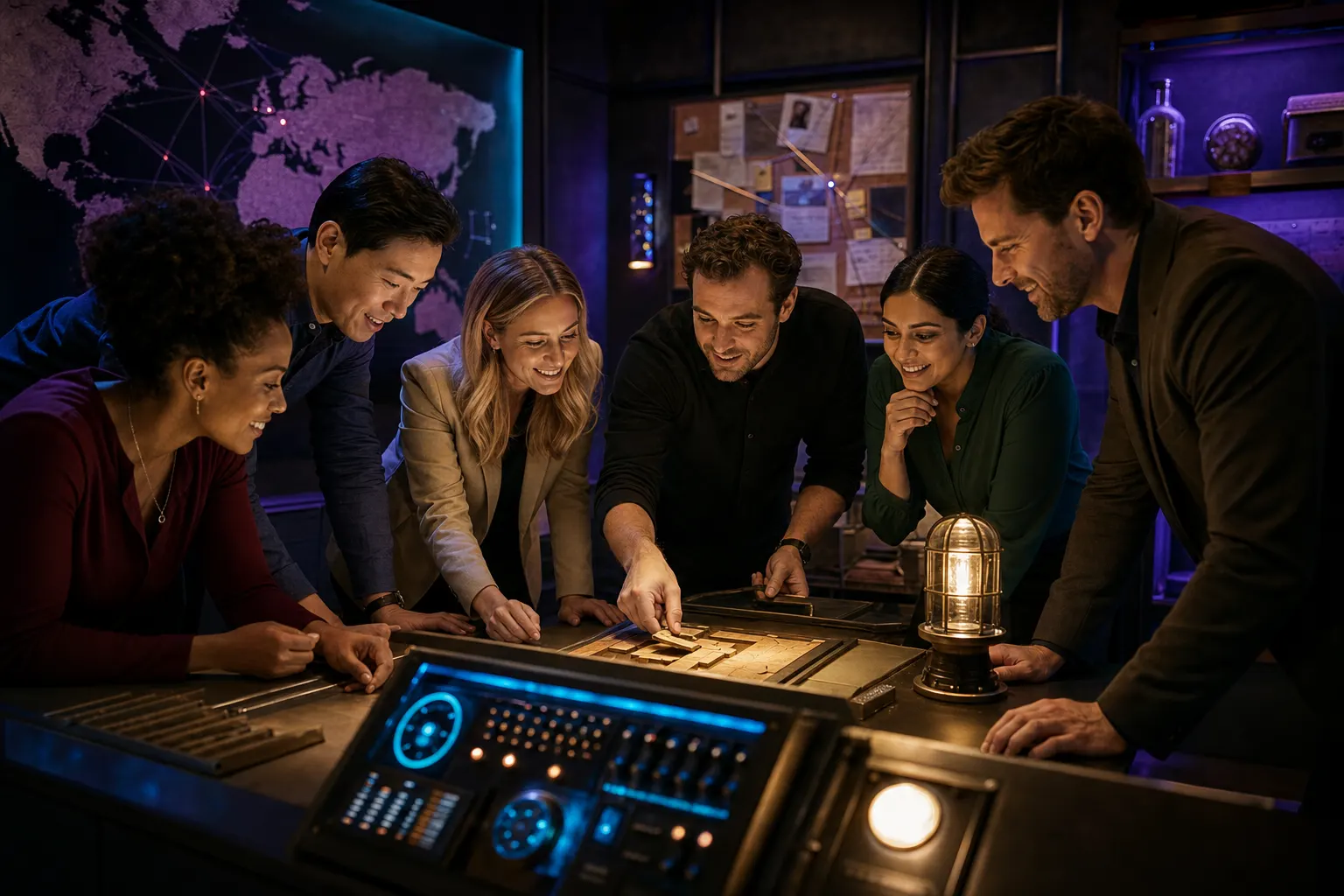
An escape room is a team game played inside a themed game space. A team usually has about 60 minutes to uncover clues, solve puzzles and complete a mission. Depending on the story, the goal may be to reach the final area, save the world, identify a criminal or carry out a covert operation.
- 01
Briefing and story introduction
The experience begins with a short briefing outside the room. Players learn the setting and mission, hear the important rules and find out what to expect.
- 02
The clock starts
After the briefing, the team enters the game space and the countdown begins. Players inspect their surroundings, pay attention to details and search for clues and items intended for play.
- 03
Solve and progress
The team connects game items with clues and solves a sequence of puzzles leading to the final challenge. Communication, cooperation and creative thinking all matter.
- 04
Complete the story
After the game, the operator can explain any remaining solutions, answer questions and leave time for a group photo — whether or not you finished the mission in time.
During the game, the game master follows your progress through cameras. If the group gets stuck, they can provide a hint on request or give the team a gentle nudge in the right direction.
Escape rooms combine entertainment, suspense and teamwork with a story and a mental challenge. Success depends not only on solving puzzles, but also on how well everyone communicates and works together.
03 · A different world for every group
Different types of escape rooms
One reason escape rooms are so popular is the variety of stories and styles available. Rooms differ not only in their sets, but also in their puzzles, atmosphere and difficulty.
Story-driven rooms
Rooms built around a dramatic plot in which the players become part of the action — perhaps investigating a murder, completing a spy mission or saving the world from a ticking bomb.
Horror rooms
The group enters a frightening world of abandoned hospitals, ghosts, moving dolls and other surprises. Some games include live actors who intensify the suspense.
Family or children’s rooms
Rooms for a younger audience, with more accessible puzzles, fairy-tale or fantasy themes and a less intense design suited to a family outing.
Technology-led rooms
Rooms using smart systems, sensors, automated mechanisms and advanced electronics to create a more interactive and modern game.
Haifa, northern Israel and other parts of the country offer many distinctive styles. Every group can find the right experience — suspense, mystery, horror, a technology-led adventure or relaxed family fun.
04 · For almost any group
Who are escape rooms for?
Escape rooms suit almost anyone who arrives with curiosity, an appetite for a challenge and a willingness to play. They bring people together across a wide range of ages, occasions and group types.
Families
Families can enjoy meaningful time together away from screens. Children get an interactive adventure, while adults take an active role in finding the solutions.
Couples
An escape room makes an unusual date: cooperation, laughter and a shared challenge can bring a couple closer and encourage good communication.
Groups of friends
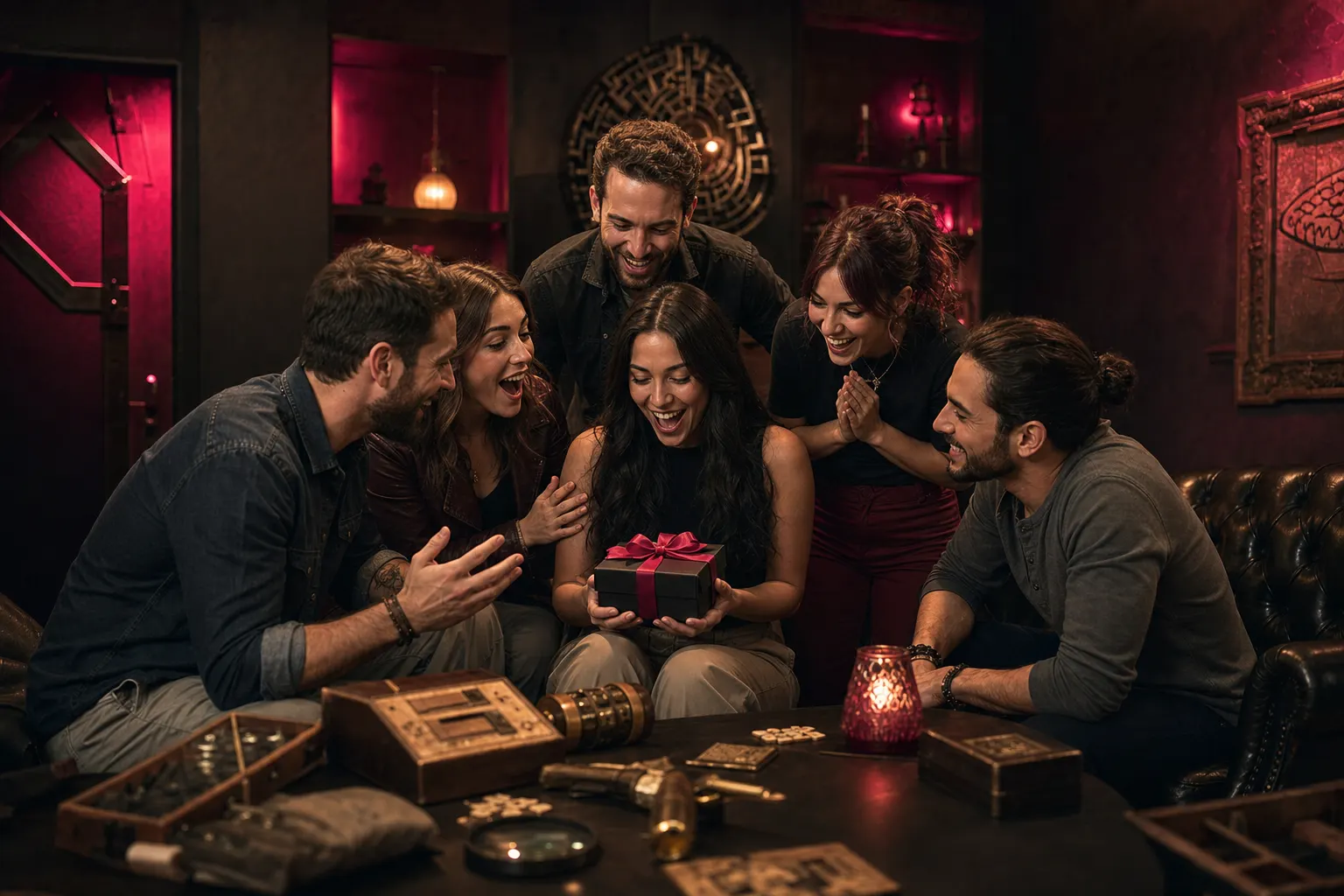
For a birthday, an evening out or a spontaneous activity, an escape room breaks the routine and gives friends a chance to work as a team.
Workplace teams
Many organisations choose escape rooms for team building: a way to practise cooperation, strengthen communication and step outside the office routine.
Beginners and experienced players
No previous experience is required. Rooms come in different difficulty levels and hints are available when needed, while Haifa and the north also offer serious challenges for experienced teams.
Beginners can choose a suitable difficulty and use hints, while experienced players can take on more complex rooms. Even a mixed group can therefore find a game that matches its pace and experience.
05 · Three names, one experience
What is the difference between an escape room and a quest room?
People often ask whether “escape room” and “Quest Room” describe different activities. The short answer is no: both refer to a themed game in which a group enters a room and tries to complete a mission or find the way out by solving puzzles within a limited time.
The different names mainly reflect the languages and cultures in which the format developed.
- חדר בריחה
- The common Hebrew name used for an escape room in Israel.
- Escape Room
- The international English term and the name most often found on tourism websites around the world.
- Quest Room
- A name more common in Russia and Eastern Europe, sometimes associated with deeper stories or adventure-led games.
The names have gradually blended in everyday use and now describe the same type of experience. If you search for escape rooms in northern Israel, Escape Room Haifa or Quest Room Haifa, you are looking for the same style of team adventure.
06 · From knowledge to experience
Quest Room’s escape rooms in Haifa
Quest Room opened Haifa’s first escape room and was among the early operators to develop the format in northern Israel. Today the complex has eight escape-room games at one address, placing it among Israel’s largest and most varied escape-room complexes and among the most prominent in the north. In each game, a team enters a story world for about 60 minutes, searches for clues, deciphers codes and uses only items intended for play, in line with the briefing, to complete the mission.
These games have several names — escape room, puzzle room or Quest Room — but all describe a team adventure to share with friends, family or a partner.
The complex is easy to reach whether you are coming from Haifa, Nesher, the Krayot, Zikhron Ya’akov, elsewhere in northern Israel or the centre of the country. Choose a room and book a game, or buy a gift card for friends or family.